
Phishing via Transaction Signature: When You Sign Your Own Heist 🖊️💀

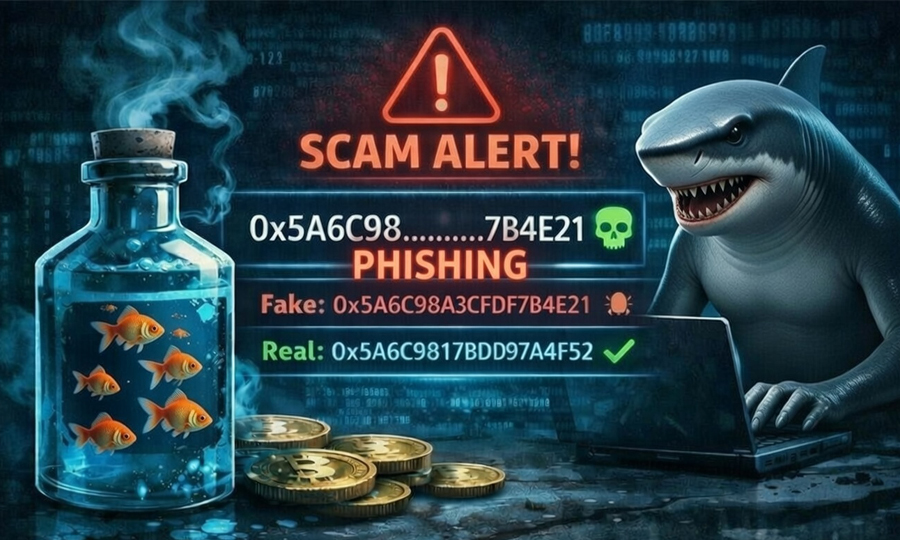
In crypto, you've been told a thousand times:
👉 "Never share your seed phrase"
👉 "Always check the address before sending"
Very well.
But nobody really explained that your wallet could be drained… without asking for your seed, without stealing your keys, and sometimes without even asking you to send anything.
Welcome to the wonderful world of phishing via transaction signature.
An elegant, technical, and horribly sneaky scam.
🧠 The Principle (Simple… and Terrifying)
In the crypto ecosystem, signing a transaction doesn't always mean sending money.
Sometimes, you're simply signing an authorization.
And that's where the trap closes.
👉 The scammer makes you sign a transaction that:
- authorizes a smart contract,
- gives it the right to spend your tokens,
- without amount limit,
- without expiration date.
Result:
You click "Sign", you see 0 ETH sent, you breathe…
And a few minutes later, your wallet is cleanly, legally, silently drained.
Applause for the scammer 👏 Condolences for you.
🎣 How Scammers Get You to Sign (Without Arousing Suspicion)
The scenarios are always well-rehearsed:
1. 🎁 Fake Airdrop
"Congratulations! You are eligible for an exclusive airdrop"
You click, connect your wallet, sign…
Spoiler: the airdrop was your own money.
Technically, the site makes you sign an authorization (allowance) that allows a smart contract to move your tokens later.
You don't see any outgoing transaction at the time of signature… but the contract can drain your wallet whenever it wants, without asking you anything again.
2. 🧾 Free or "Claimable" NFT
"You received an NFT – claim now"
No NFT existed. But the smart contract exists very well and is registered on the blockchain.
The signature often serves to authorize a contract via setApprovalForAll, very common in NFTs.
Once signed, the contract can transfer all your NFTs (even some tokens) without any other interaction from you.
3. 🔄 Fake Wallet Verification
"For security reasons, please sign to verify your wallet"
No.
Signing ≠ verifying.
Signing = authorizing.
Here, the scammer abuses the confusion between signature and transaction.
The signature is presented as a simple verification, when in reality it gives permanent access to your wallet.
4. 📩 "Urgent" Message
Email, Discord, Telegram, X (Twitter)…
"Action required within 24h"
Classic. Always urgent. Always fake.
Urgency is used to prevent you from reading the signature details displayed by your wallet.
The less you think, the faster you sign… and the more likely the scam succeeds.
🧨 Why It's So Dangerous
Unlike other scams:
- ❌ You don't give your seed
- ❌ You don't make a transfer
- ❌ You sometimes see no immediate fund outflow
And yet:
- the smart contract can drain your wallet whenever it wants
- you have no notification
- everything is technically "authorized"
It's burglary with your signed consent.
🧪 Concrete Example: The Signature That Smells Bad (MetaMask version)
You arrive on a random site or a copy of your favorite site, click on Claim reward, and MetaMask shows you something like:
Allow this site to access your tokens?
Amount: Unlimited
Action: SetApprovalForAll
💀 Translation in no-BS English:
👉 "I authorize this smart contract to do absolutely whatever it wants with my tokens, now and later."
No ETH sent. No red alert. Just a nice innocent Sign button.
It's exactly like giving a spare key while thinking: "Don't worry, he'll just take a look."
🚩 What a Dangerous Signature Looks Like (Line by Line)
When signing, be wary if you see:
📌 1. SetApprovalForAll
👉 Global authorization, often used to drain NFTs and tokens.
📌 2. Unlimited / MaxUint256
👉 No ceiling = open bar.
📌 3. Unknown Spender
👉 Sketchy address, recent contract, no history.
📌 4. No Clear Explanation
👉 If the site doesn't explain exactly why you're signing, it's a no.
📌 5. Zero Visible Transaction
👉 Paradoxically, that's often when it's most dangerous.
🛡️ CryptoSac Checklist: "Do I Sign or Do I Run?"
Before clicking Sign, ask yourself these simple questions:
✅ 1. Do I know this site / this project?
✅ 2. Do I understand exactly what this signature authorizes?
❌ 3. Is it urgent, free, time-limited?
❌ 4. Is MetaMask talking about unlimited authorization?
👉 If you check a single ❌ → you close the tab.
No FOMO. No ego. No signature.
🧠 CryptoSac Dad Tip (The One That Saves Wallets)
-
Separate Your Uses
- Never do everything with one wallet.
-
Use Two Distinct Wallets
- Main wallet: storage only, never connected to random sites
- Test / burner wallet: DeFi, NFTs, sketchy airdrops, all kinds of tests
-
Survival Rule
- If a wallet must die, let it contain nothing important
🧹 What If It's Already Too Late?
Go revoke authorizations:
- On Etherscan / BscScan / Polygonscan
- Token Approvals section
You'll sometimes see contracts with:
- Authorization: Unlimited
- Date: 6 months ago
😬 Yes. Exactly.
Bonus: Tools for Smart Paranoids 🧯
| 🧰 Tool | 🧠 Purpose |
|---|---|
| Etherscan Token Approval | Revoke dangerous authorizations |
| Revoke.cash | Manage your authorizations across multiple blockchains |
| ScamSniffer | Extension to detect crypto phishing sites |
| Wallet Guard | Warns before dangerous signatures |
🧾 CryptoSac Moral
In crypto:
- ❌ Clicking is easy
- ❌ Signing is automatic
- ✅ Understanding is optional… but vital
Phishing isn't snatching theft.
It's you opening the door, handing over the key, and almost thanking the guy as he leaves.
Conclusion: If You Want to Sleep Soundly… 🧾
Signature phishing is a scam that's:
- invisible,
- technical,
- formidably effective.
It doesn't rely on your ignorance, but on your automatic trust in the "Sign" button.
In crypto, every click is a financial decision.
And sometimes, the biggest trap isn't what you send… but what you authorize.
So stay vigilant, keep a cool head and:
✅ Never sign what you don't understand.
✅ Separate your wallets (one for storing, one for testing).
✅ Regularly check your authorizations.
✅ And above all… keep being suspicious of everything, except Cryptosac.fr 😏
Share or you're a noob!
Our Crypto Affiliations
Want to buy your first cryptos?
Discover our complete guide then click on our official links for each platform and start easily!





Keywords Cloud
Navigation


Warning
"The content published on Cryptosac www.cryptosac.fr is for informational purposes only and does not constitute investment advice or financial recommendation."